Solder Alloys for Automotive Electronics
Lead-free alloys for ECUs, sensors and wiring harnesses, with batch documentation for Tier 1 and Tier 2 suppliers
Alloys for automotive electronics: SAC305, high-silver SAC405 and low-silver SAC0307, with SMD solder pastes and no-clean flux-cored wires. Per-batch analysis certificate and ISO 9001 quality system.
Why Choose Our Automotive Alloys
Specialised solutions for critical applications in the automotive industry
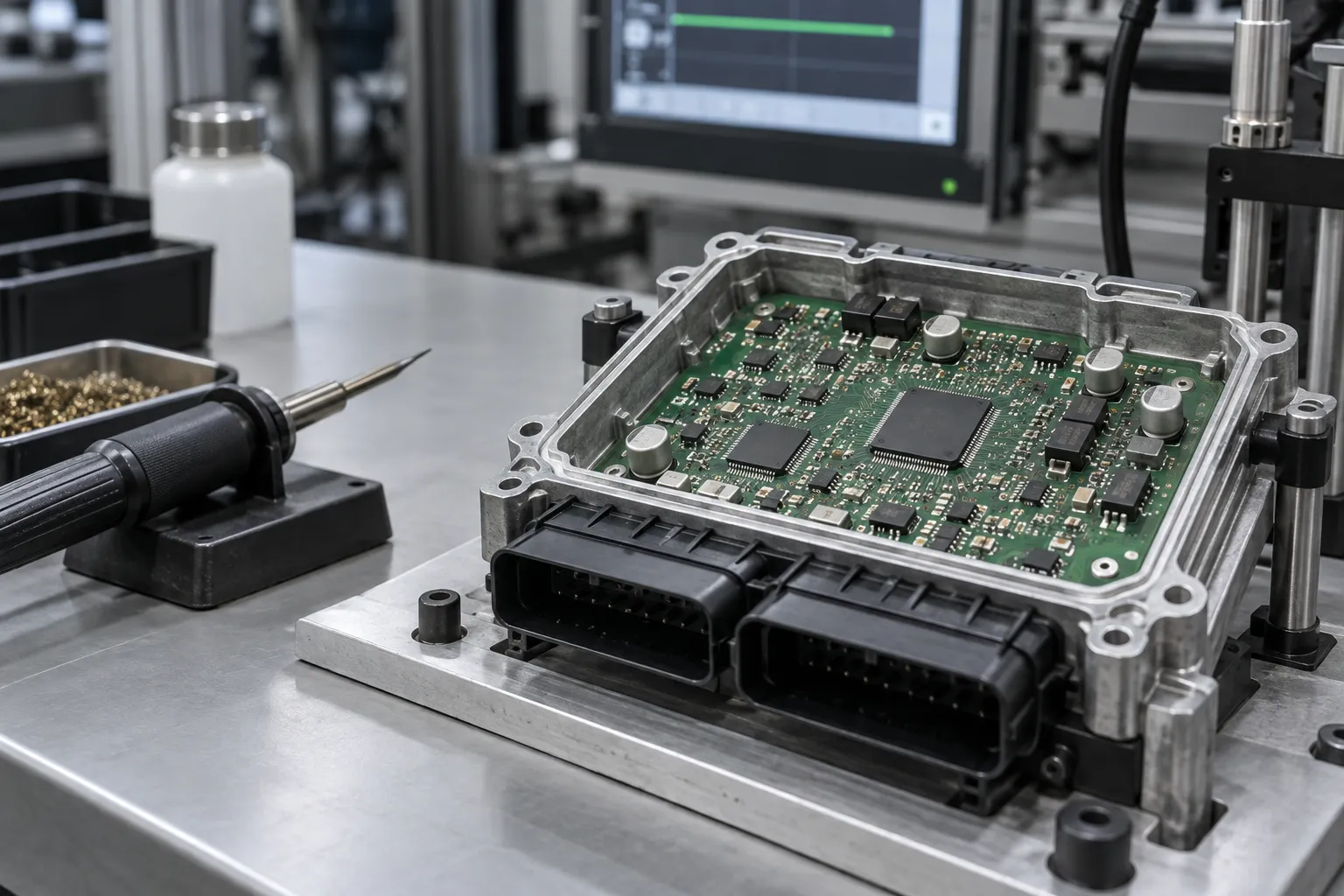
Automotive Alloy Technical Specifications
Lead-free alloys for automotive electronics
| Alloy | Composition | Melting Point | Application |
|---|---|---|---|
| SAC305 | Sn96.5/Ag3/Cu0.5 | 217–220 °C | Standard for reflow, wave and selective soldering |
| SAC405 | Sn95.5/Ag4/Cu0.5 | 217–221 °C | More silver, when the specification requires it |
| SAC0307 | Sn99/Ag0.3/Cu0.7 | 217–227 °C | Low silver, contained cost in wave and selective soldering |
| Sn99.3Cu0.7 | Sn99.3/Cu0.7 | 227 °C | Silver-free, for wiring and non-critical components |
Automotive Application Sectors
Specialised applications for the automotive industry
Control Units and ECUs
Soldering of engine control units, ABS, airbag and control systems. High-reliability alloys for critical components.
Sensors and Actuators
Electronic components for temperature, pressure and position sensors. Resistance to vibration and thermal shock.
Safety Systems
Modules for airbag, ABS, ESP and ADAS, where the customer's specification defines the alloy and documentation.
Connectors and Wiring
Electrical connectors, terminals and wiring systems. Resistance to corrosion and mechanical stress.
Automotive Alloys: Which One to Choose?
Comparison of solutions for different automotive applications
| Application | Recommended Alloy | Advantages | Notes |
|---|---|---|---|
| Specifications that prescribe SAC405 | SAC405 | More silver, higher cost | Thermal cycling similar to SAC305 |
| General electronics | SAC305 | Industry standard | The most widely used choice |
| High-volume wave and selective soldering | SAC0307 | Lower cost than SAC305 | Non-critical THT components |
| Wiring and connectors | Sn99.3Cu0.7 | Silver-free | Tinning of conductors |
The alloy must be chosen according to the customer's specification and the process: SAC305 for general use, SAC405 when the specification requires it, SAC0307 and Sn99.3Cu0.7 to keep costs down. Consult us for the choice.
Frequently Asked Questions about Automotive Soldering
Answers to the most common questions about alloys for automotive
Request Advice for Your Automotive Application
Compare SAC305, SAC405 and SAC0307, or find out about our ISO 9001 quality system. Request a quotation for your line.
Telefono
+39 02 6604 7053